HomeMarketing
This Generation's App Store Moment is Upon Us
This Generation's App Store Moment is Upon Us

RIGHT PLACE, RIGHT TIME, RIGHT A.I.?
Do you ever think back to those early days of the internet and ask yourself why you didn’t jump on what now feels like an obviously world-changing opportunity? We may be at one of those inflection points right now with Custom GPTs from OpenAI.
I should know, because I happen to have more than a few moments where I was in the right place at the right time, saw what was happening, and yet somehow managed to not quite take advantage. Here are a few of my favourites that still sting more than a little when I look back:
- Blogging — I created my first blog in 2008, writing about business news, then another in 2009 that was about hockey. The hockey one quickly picked up a few hundred thousand readers before we moved on to our next idea. In the next few years, blogs would regularly monetize and get acquired for millions dollars. Ours was not one of them.
- Bitcoin — I got interested this new digital currency idea and I even went so far as to set up my laptop to mine Bitcoin. I shut it down when I realized that I’d be unlikely to get more than 1 BTC a week, which in those days was worth about $20 each. Today’s Bitcoin price? $49,000.
- Apple’s App Store — Around 2012 there was a split in the developer community. The App Store had just launched, and at the same time Facebook had released their own app marketplace that was powered by their own coding language known as FBML. My partners and I set about furiously developing apps that we thought people would use, and we assumed that the best place to do it would be the world’s largest social network. Then one day, just after we launched our most ambitious app yet, Facebook shut down the experiment, rendering all of our work useless.
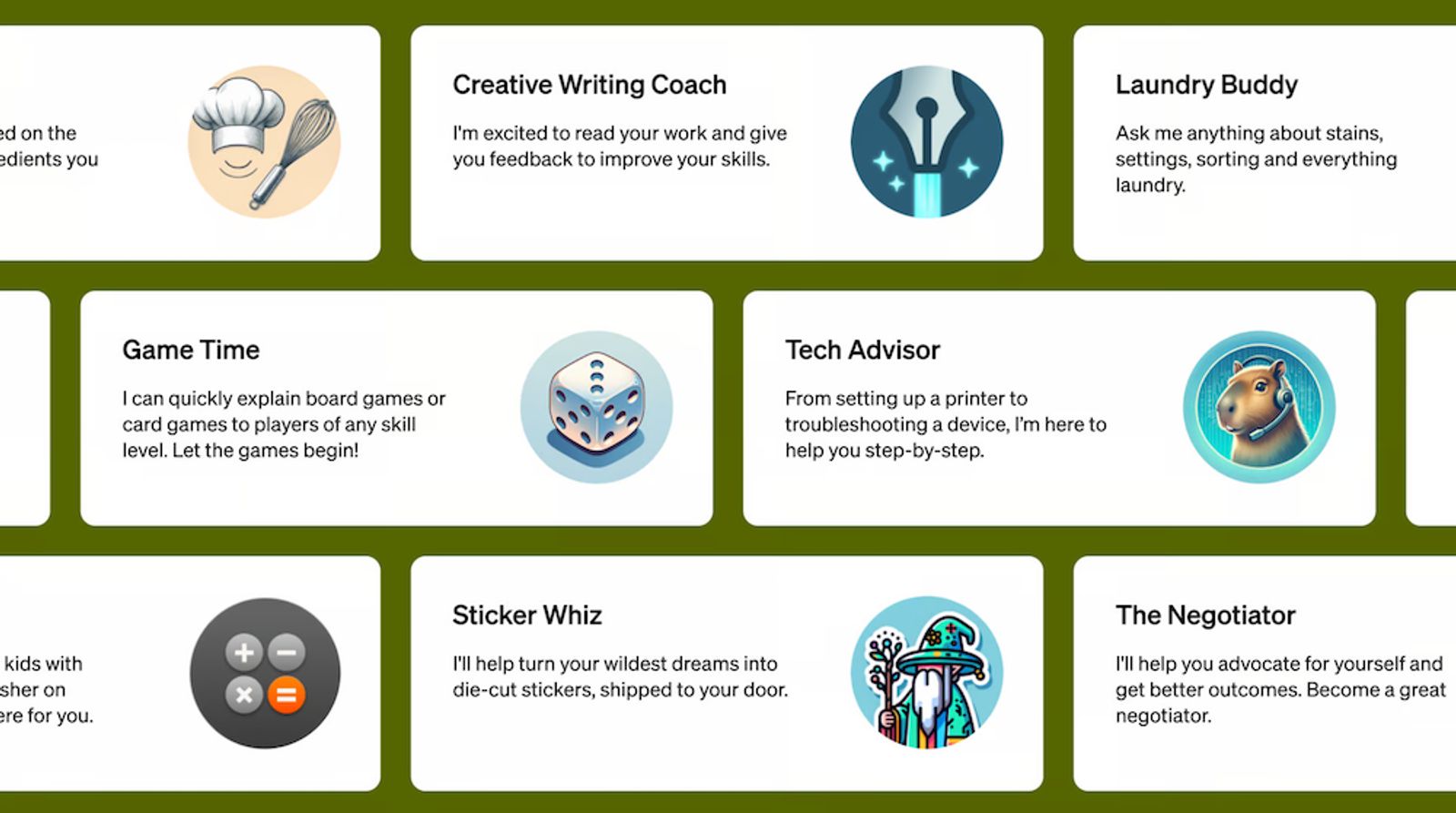
This week, OpenAI’s big announcement about Custom GPTs will make it possible for anyone to create their own AI assistant that can do just about anything you can imagine. For example, over the weekend I put together a bot that can analyze advertising creative and make recommendations for improvement, and another one for Canadian Politics that will challenge your ideas in order to help us all understand where our positions are based in real policy, and where they could be stronger.
But those are just fun toys compared with what’s to come. Right now we may be at the Beer Chugging App-phase of the platform — you may remember that in the early days of the App Store, one of the most popular downloads was an app that would fill your iPhone’s screen with beer, then drain as you tilted your phone to pour it out.
In those days, you would have been reasonable to predict that the App Store was a great place for some fun games and silly features, but would never become a world changing platform, until it did.
The turning point for Custom GPTs will be OpenAI’s version of the app store. They have announced that they’re going to allow us to make our creations available to the world, and then share in the revenue generated.
When that happens, databases that you can use to train your bots can instantly become valuable. People like you and I — who have access to content like training materials or research reports — will be able to create proprietary bots that will help people to answer questions and create things that they otherwise would not have access to.
What exactly will those projects do? It’s exciting to say that I have no idea. In the early days of the App Store, could anyone have predicted Uber? Or Duolingo? Or TikTok?
Besides, given my track record with these things, your best bet is probably going to be the opposite of whatever I do next.
Read more about the plans for Custom GPTs here
DO YOU HAVE A PLAN FOR Q5?
THE MADE UP QUARTER IS WORTH PAYING ATTENTION TO
One of the things that the business world is best at is inventing new phrases that don’t really need to exist, and don’t really make any sense, like a 5th Quarter. And yet, despite the buzzwordiness of it all, there is an insight that we should all be paying attention to when it comes to “Q5.”
In general, marketing plans ramp up throughout the year to peak just before the holiday season. Recently, some smart researchers noticed that there’s an under-appreciated section of time that stretches from roughly December 25 to mid-January, and that’s what they’ve identified as the “5th Quarter” of the year.
During that post-Christmas period, shopping activities and sales remain unusually high, yet many brands have shut off their advertising campaigns. The high demand paired with a dropoff of competition from brands creates a real opportunity, and just takes a bit of extra planning to capitalize on.
TikTok put together a whole Q5 Marketing Guide that’s helpful even if your brand isn’t planning to use TikTok. A few stats about the value of Q5 include:
- More engagement: 81% of TikTok users plan to spend the same amount of time or more on TikTok in Q5.
- More shopping: 79% of TikTok users are likely to continue shopping in Q5.
- More mobile activity: 67% of TikTok users are likely to spend the same amount or more time downloading apps in Q5.
- More self-reflection: 96% of TikTok users have specific goals they're focusing on in 2024.
Meanwhile, Business of Apps used their extensive dataset to produce a piece that they’ve called “Q5: The most wonderful time of year for performance advertising,” which focuses specifically on the cheaper ad rates available during that period.
And even if you don’t spend a dollar on ads, the slower content production from brand teams is going to make it easier to cut through the algorithms. I just hope that soon we can come up with a better name for this time of year than “Q5.”
GOOGLE’S 100 MOST-SEARCHED GIFTS
THE SEARCH ENGINE WANTS TO INSPIRE YOUR HOLIDAY SHOPPING
This one may spark a bit of creative thinking for your marketing tactics, and will almost certainly inspire some creative gift-giving ideas this holiday season.
Google has put together an interactive guide that they’re calling the Holiday 100. It’s their list of 100 gifts that are trending this year, according to their search engine data.
The first thing to love about this idea is how they’re using something as simple as search data to create a super creative experience that is no doubt going to generate a ton of traffic, attention, and earned media for them. The initiative is attached to Shop With Google, so the goal is to get more people thinking about doing their holiday shopping on Google’s platform.
The other reason we love this is because of the way it can solve a real problem that so many people have — gift ideas — in a way that only Google can.
You should check out the guide, but just in case you don’t feel like clicking, here are 5 items on the Holiday 100 that surprised us:
- Human dog beds
- Mini nugget ice makers
- Squishmallows
- Speed cubes
- Puzzle vases
5 that came as no surprise:
- Stanley tumblers
- lululemon belt bags
- Smartwatches
- Yeti coolers
- Luggage tracker tags
And 1 that I can absolutely co-sign:
- Ninja Creami Deluxe (yes, you can find space - it’s worth it)
NOBODY WANTS TO BUY WHAT X IS SELLING
AD RATE CHANGES SHOW WHERE ADVERTISERS ARE SHIFTING THEIR ATTENTION
The name of the game, when it comes to online advertising, is finding the ad units that will produce the greatest number of conversions for the lowest cost. That’s why this recent study from Gupta Media, that looked at how the rates on the biggest ad platforms have been shifting, is so interesting.
First, and most notably, they found that X's advertising rates have dropped by 78% since the platform was purchased by Elon Musk, going as low as $0.32 CPM. At the same time, TikTok year-over-year growth is the fastest, where it’s seeing a 12.28% increase in CPM in 2023 compared to 2022, and a 90% increase in CPMs since 2021.
Despite the growth, TikTok’s rates are still cheaper than similar ads on Facebook and Instagram, but Gupta’s findings show TikTok's rates growing at almost double the rate of Meta, which is up just 7.4%, so that gap is closing fast.
But rates are only half of the story. Are the ads actually working? They show that year-to-date, TikTok ads are 53% more efficient than Meta ads. So in short – yes, for now TikTok is not only cheaper, but more effective at driving conversions.
Similar to the way that TikTok shot up in 2021-2022 and then levelled off a bit this year, YouTube was up 45% coming into 2022, and then grew only 13% this year.
So, given that there is a fire sale happening over at X while everything else is getting more expensive, should we all be handing our ad budgets over to Elon? Everything is worth testing, for sure, but it seems pretty clear that in this case you get what you pay for.
A FEW MORE STORIES WORTH A CLICK
STUFF THAT WILL MAKE YOU JUST A BIT SMARTER THIS WEEK
- 7 examples of effective influencer marketing, curated by Later
- How to optimize your images for AI-powered search from SearchEngineLand
- TikTok is going to integrate with SalesForce, apparently
- Meta is making it possible for creators to test their content and earn rewards
Written by Conner Galway, Junction Consulting
Get Canada's marketing brief every morning.
Free, fast, and read by 8,000+ marketers, founders, and comms pros across the country.